
Architect Bryan Young Shares His Inspirations

Architect Bryan Young, a luminary in the design world, offers a compelling glimpse into the diverse influences that fuel his acclaimed creative practice. From the early architectural epiphanies of his youth to his current explorations in materiality and unique fabrication, Young's journey is a testament to an artist constantly seeking new perspectives and pushing boundaries. His insights, shared in a recent feature, underscore the deep connections between personal history, artistic appreciation, and groundbreaking design.
Visionary Architect Bryan Young Unveils Artistic Passions and Influential Projects
Early Architectural Awakening and Academic Pursuits: Bryan Young's fascination with the built environment began in his formative years in Los Angeles. A pivotal moment arrived during his teenage surfing days at Black's Beach, San Diego, where the majestic Salk Institute for Biological Studies, a masterpiece by Louis Kahn, left an indelible mark. Young recounts this experience as encountering one of the most transparent and authentic structures he has ever witnessed. This early captivation led him to pursue a Bachelor's degree in architecture at UC Berkeley, followed by advanced studies at the prestigious Harvard Graduate School of Design.
Establishing Young Projects and VERSO Gallery: In 2010, Young established Young Projects, his New York City-based studio, which has since become renowned for its emphasis on innovative materiality and unconventional fabrication techniques, including the use of grown crystals and hand-pulled plaster. Beyond his architectural practice, Young is deeply engaged in interior design and the creation of bespoke display objects. He frequently collaborates with skilled artisans to produce unique pieces. In 2002, he co-founded VERSO, a design gallery in Tribeca with Amauri Aguiar, curating a distinguished collection of custom furniture and artistic creations.
A Deep Dive into Young's Inspirations: In a recent interview, Bryan Young openly shared five key sources of inspiration that profoundly influence his work:
The Enduring Allure of Alexander Girard's Artistry
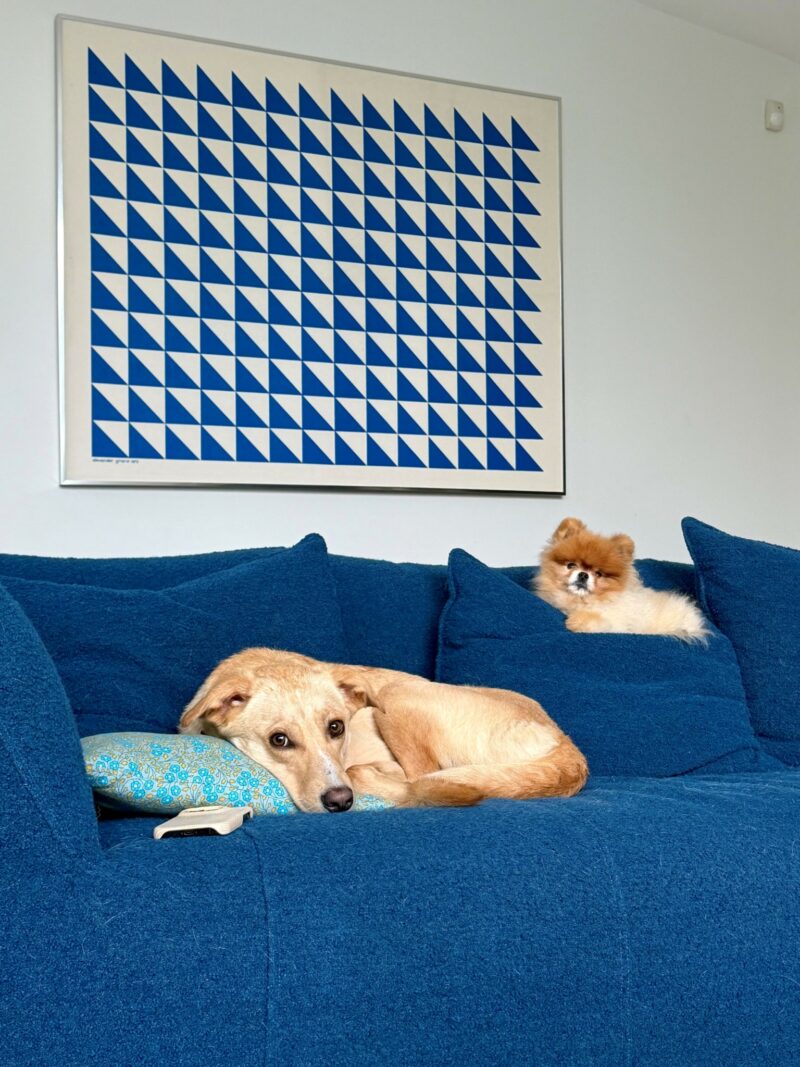
Young speaks with reverence about Alexander Girard’s 1972 silkscreen, The Blue Triangles, a 40th birthday gift to his wife Marina in 2012. He describes how, over 14 years, the seemingly simple geometric patterns have revealed increasing complexity and vibrancy. The interplay of blue and white triangles creates optical illusions, hinting at an underlying depth and movement. This artwork directly informed the unique tiling strategy used in his Glitch House project in the Dominican Republic and subsequent silkscreen collaborations with the Soho gallery a83, demonstrating how prolonged contemplation can unlock profound design insights.
The Transfixing Beauty of Raina Lee's Ceramic Roses
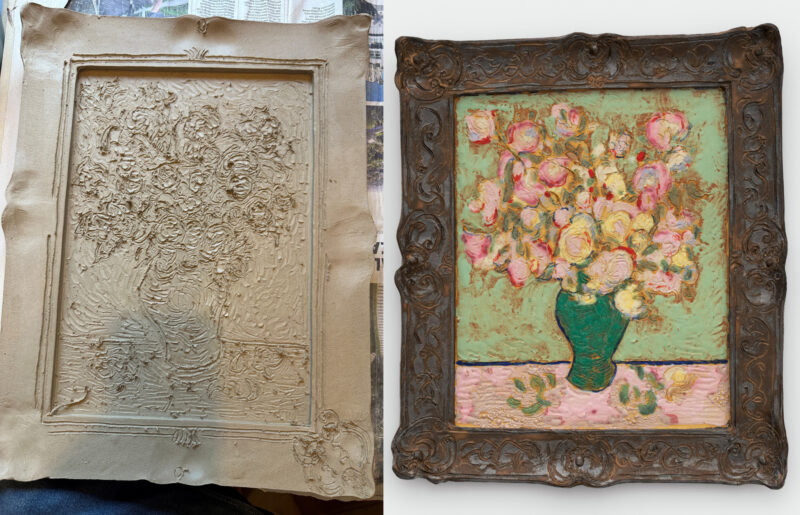
Young is captivated by Raina Lee’s ceramic rendition of Van Gogh’s Roses, which adorns his Brooklyn kitchen. This piece is a faithful replica of Van Gogh’s 1890 work, restoring the original pink hues that had faded in the Met’s permanent collection. The ceramic glaze introduces an unexpected dimensionality, creating a shimmering surface that both echoes and diverges from Van Gogh’s brushstrokes. Lee’s innovative use of chrome and tin in her unique pink glaze exemplifies how traditional craftsmanship, combined with artistic experimentation, can yield exquisite aesthetic results.
Nostalgic Echoes: The Parrot and The Falcon
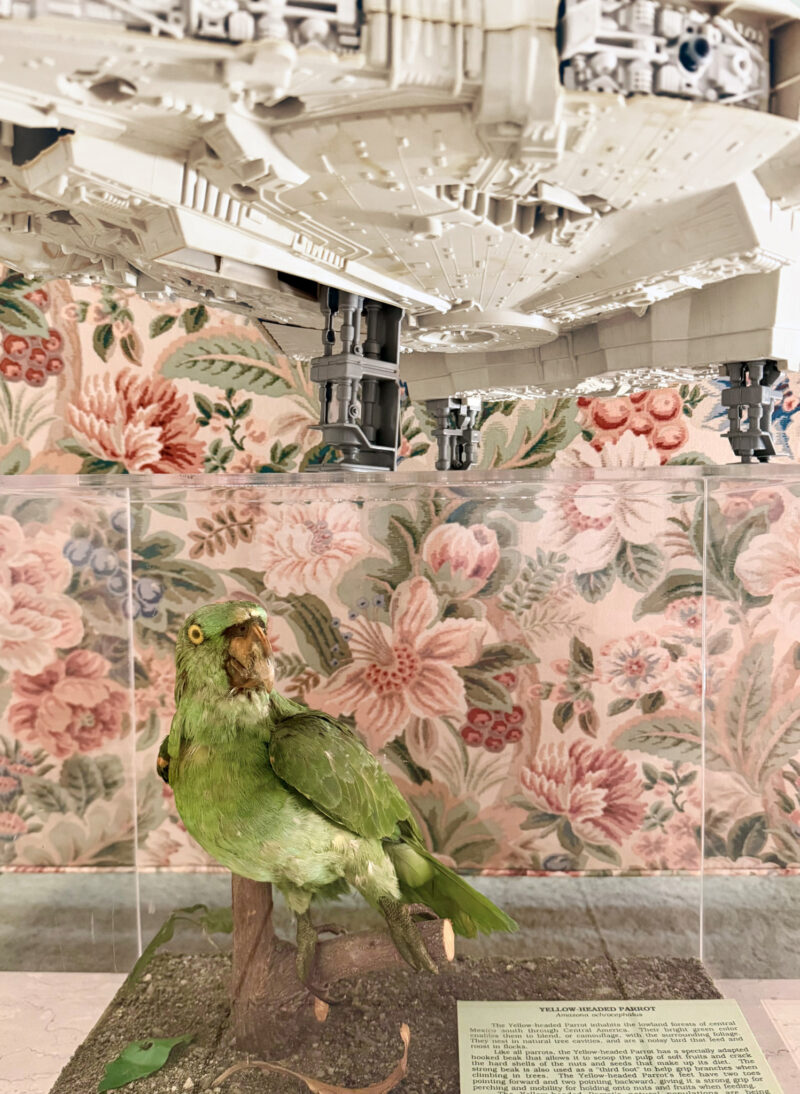
Young finds inspiration in the unexpected juxtaposition of familiar objects, as seen in his display of a yellow-headed parrot beneath a Millennium Falcon model. The taxidermied parrot, a gift from his grandmother who was a docent at the Los Angeles Natural History Museum, and the Kenner Millennium Falcon, a cherished childhood toy shared with his brothers, represent a fusion of personal history and pop culture. This whimsical arrangement, set against his mother’s floral sofa, evokes a collage of memories while simultaneously provoking a sense of otherworldliness. These objects from his past ignited a lifelong fascination with collecting, dioramas, and fictional narratives, which continue to influence his creative concepts.
The Dynamic Landscape of Playa Grande, Dominican Republic
Having spent significant time in the urban sprawl of New York City, Young expresses a profound appreciation for the vibrant and ever-changing landscape of the Dominican Republic. He recalls a memorable 2015 site visit to Playa Grande with Young Projects partner Noah Marciniak, where he observed the powerful presence of a magnificent ficus tree. This environment, rich with its thick, living air and dappled sunlight filtering through the canopy, demanded an architectural response that was deeply respectful of its natural context. The firm’s main retreat house at Playa Grande, designed with a roof of 160 shifting and rotating scissor trusses, harmonizes with the jungle’s fluid geometry without imposing upon it. A central courtyard within the house embraces another ficus tree, fostering a dialogue between nature and architecture rather than a mere enclosure.
The Electrifying Experience of Live Music
Young passionately recounts the transformative power of live music, particularly his first concert after the 2021 lockdown – The Flaming Lips at Brooklyn Steel. This experience, shared with a crowd yearning for connection after two years of isolation, served as a powerful reminder of the importance of human interaction, even within individual "bubbles." Since then, Young has cultivated an extensive list of concerts, encompassing diverse artists and venues across New York City and beyond. He emphasizes that beyond the setlists, the true magic lies in the shared experience with loved ones and the collective energy of strangers dancing together, fully immersed in the moment.
Highlighting Notable Projects by Young Projects
Young Projects showcases an impressive portfolio of architectural and interior design endeavors, each reflecting Bryan Young’s distinctive approach to materiality, context, and experience.
The Glitch House, Dominican Republic
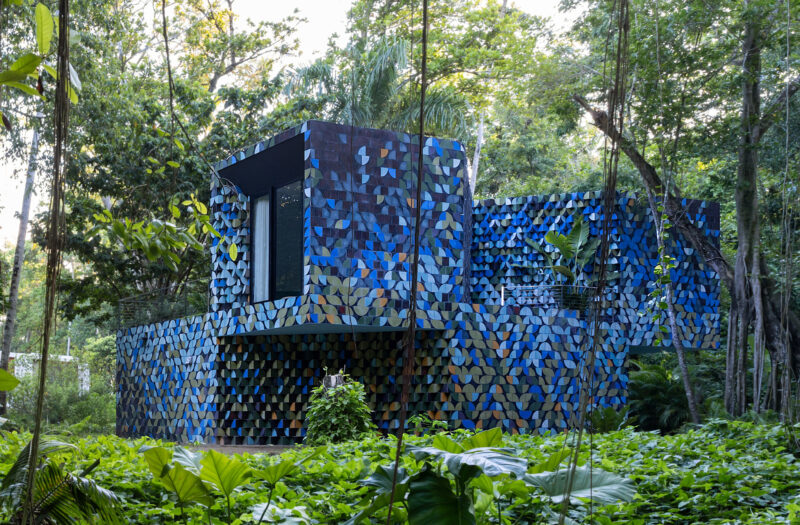
Nestled deep within the Dominican jungle, away from the main Retreat House at Casa Las Olas, the Glitch House serves as both guest lodging and a functional workspace for property maintenance. Its exterior is adorned with handcrafted encaustic cement tiles, each featuring a simple quarter-arc pattern. This intricate tiling, combined with the staggered concrete block walls, creates a mesmerizing optical effect that blurs the lines between shadows and graphic patterns. As the first structure visitors encounter at Casa Las Olas, the Glitch House subtly merges with the natural landscape, hinting at the immersive design experiences that define the entire retreat.
Soho Loft, New York City
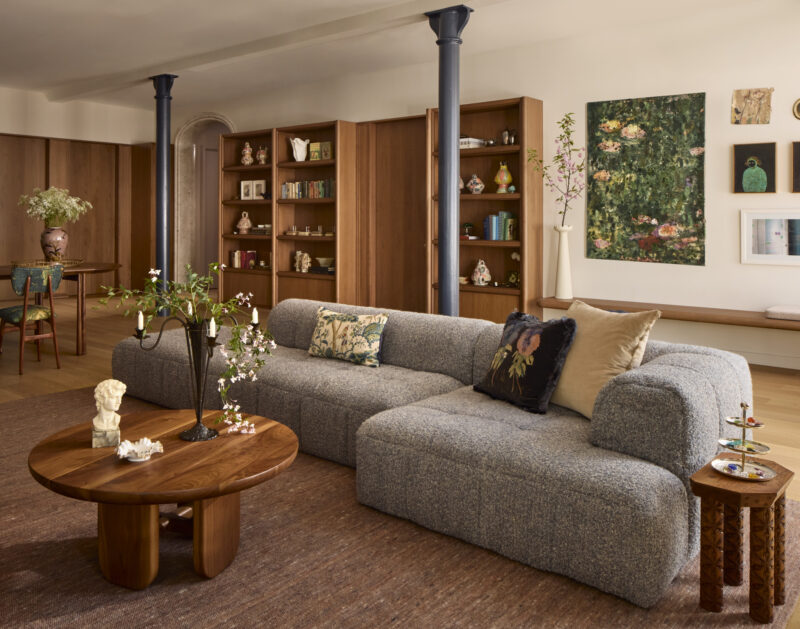
This Soho loft, a reimagining of a three-bedroom layout within a converted warehouse, now boasts an elevated aesthetic. The entrance features a gracefully plastered foyer culminating in a Scagliola archway, leading into an expansive living area. Custom walnut and stainless steel millwork anchor the kitchen within the open floor plan, while a series of thoughtfully integrated library bookcases frame the entry to the primary suite, powder room, and laundry area, blending functionality with refined design.
French Quarter Cottage, New Orleans, Louisiana
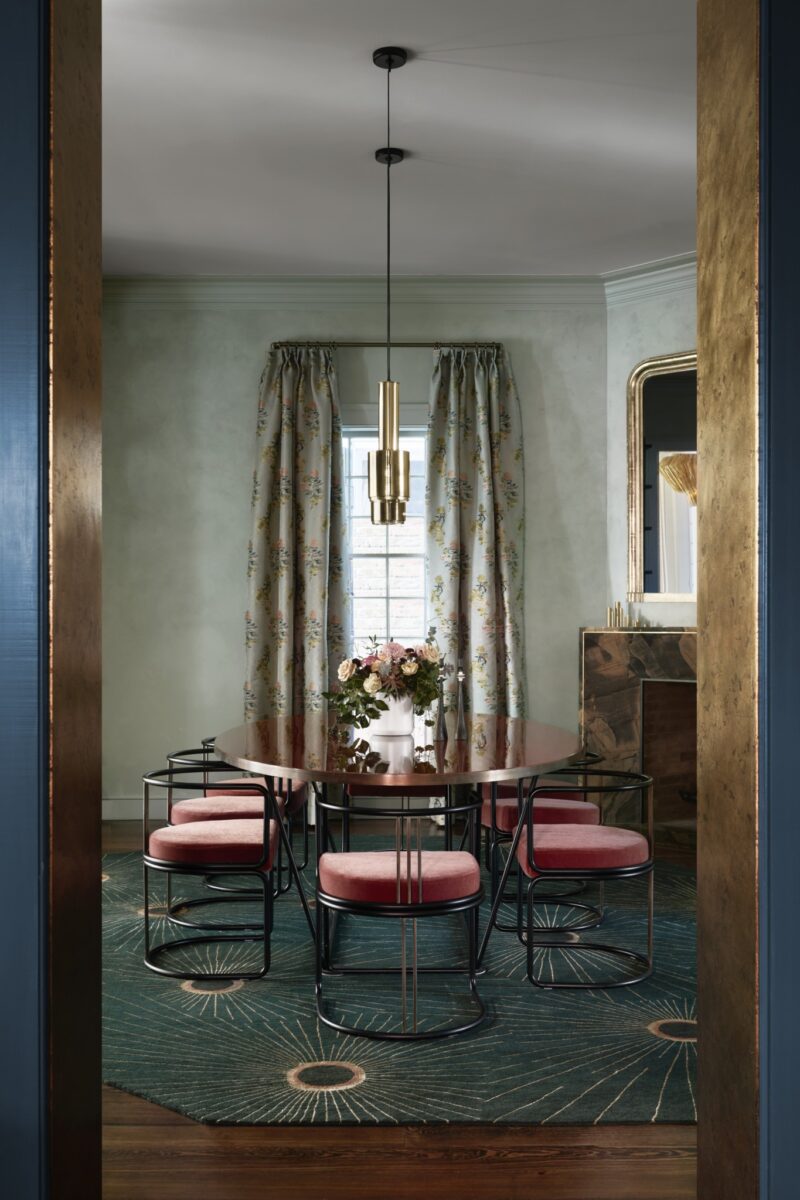
This extensive interior renovation transformed an 1820s Creole cottage compound, creating one of the French Quarter’s most spacious private courtyards. The property now includes a main house and a carriage house, with a charming gallery that overlooks a walled courtyard, a tranquil swimming pool, and venerable old-growth trees. The classic four-square layout of the main house accommodates primary rooms such as a bar, music room, salon, and dining room. Each of these adjacent spaces is uniquely designed with variations in color, finish, material, and furnishings. These distinct rooms are connected by custom ombre-patinated gold-leafed open doorways, acting as elegant thresholds between diverse aesthetic experiences.
Casa Las Olas, Dominican Republic
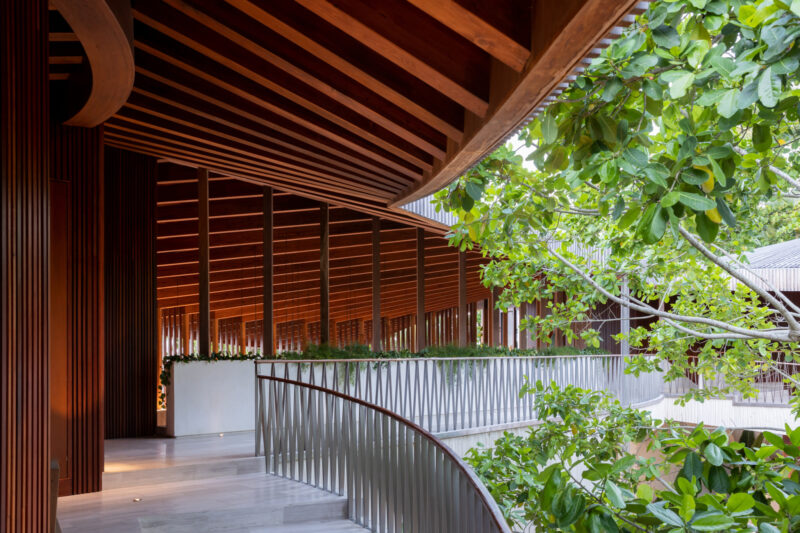
Situated on a pristine, previously undeveloped site, the Retreat House at Casa Las Olas masterfully integrates with its natural surroundings, offering breathtaking views of the Atlantic Ocean while harmonizing with the lush jungle. Further into the property, the Porch House and Glitch House provide additional guest accommodations and supplementary program spaces. Conceptually, the Retreat House is a transformed courtyard, its design meticulously guided by solar orientation, natural ventilation, and the preservation of existing trees and vegetation. The resulting form is a gracefully drifting ring that shifts in plan and section just beneath the jungle’s canopy. The roof, composed of 160 uniquely dimensioned scissor trusses with simple joinery, creates a complex yet fluid structural condition. This design allows for a panoramic experience of the site, seamlessly connecting the diverse jungle landscape with the expansive ocean vistas.
Upside Down Chair
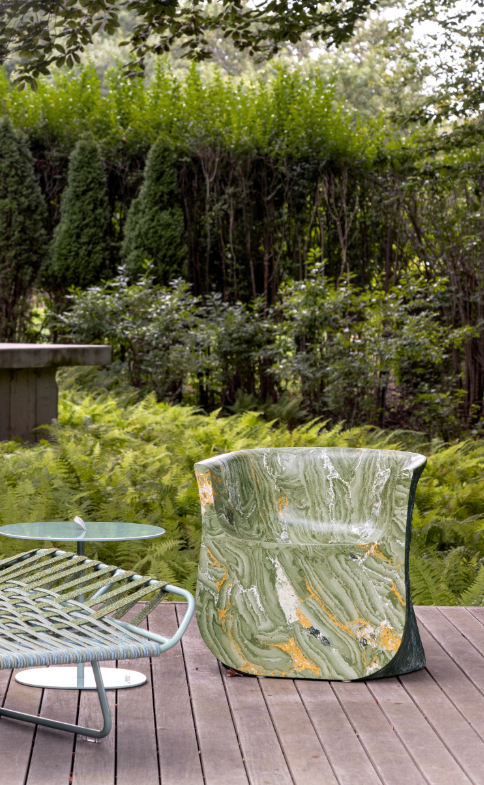
In collaboration with Art in Construction in Brooklyn, New York, Young Projects developed the unique Upside Down Chair. This innovative piece marries the 17th-century plaster technique of scagliola with the raw aesthetic of concrete. The outcome is a striking, marble-like finish that transitions from a smooth, refined seating surface to a rugged, geological exterior. Its durable yet elegant form makes the Upside Down Chair equally suitable for both indoor and outdoor environments.
Bryan Young's journey is a powerful reminder that true creativity stems from a rich tapestry of experiences, observations, and deep personal connections. His work, whether in architecture, art, or furniture design, consistently challenges perceptions and invites viewers to engage more deeply with their surroundings. By drawing inspiration from unexpected sources—from the intricate patterns of a Girard silkscreen to the raw energy of a live concert—Young demonstrates that design is not merely about aesthetics, but about crafting meaningful experiences that resonate on multiple levels. His emphasis on materiality and unique fabrication also highlights a commitment to craftsmanship and the exploration of new possibilities within traditional methods. Ultimately, Young's perspective encourages us to look beyond the obvious, to find beauty and insight in the everyday, and to allow these discoveries to inform and enrich our creative endeavors.